
边界感知混合分割网络
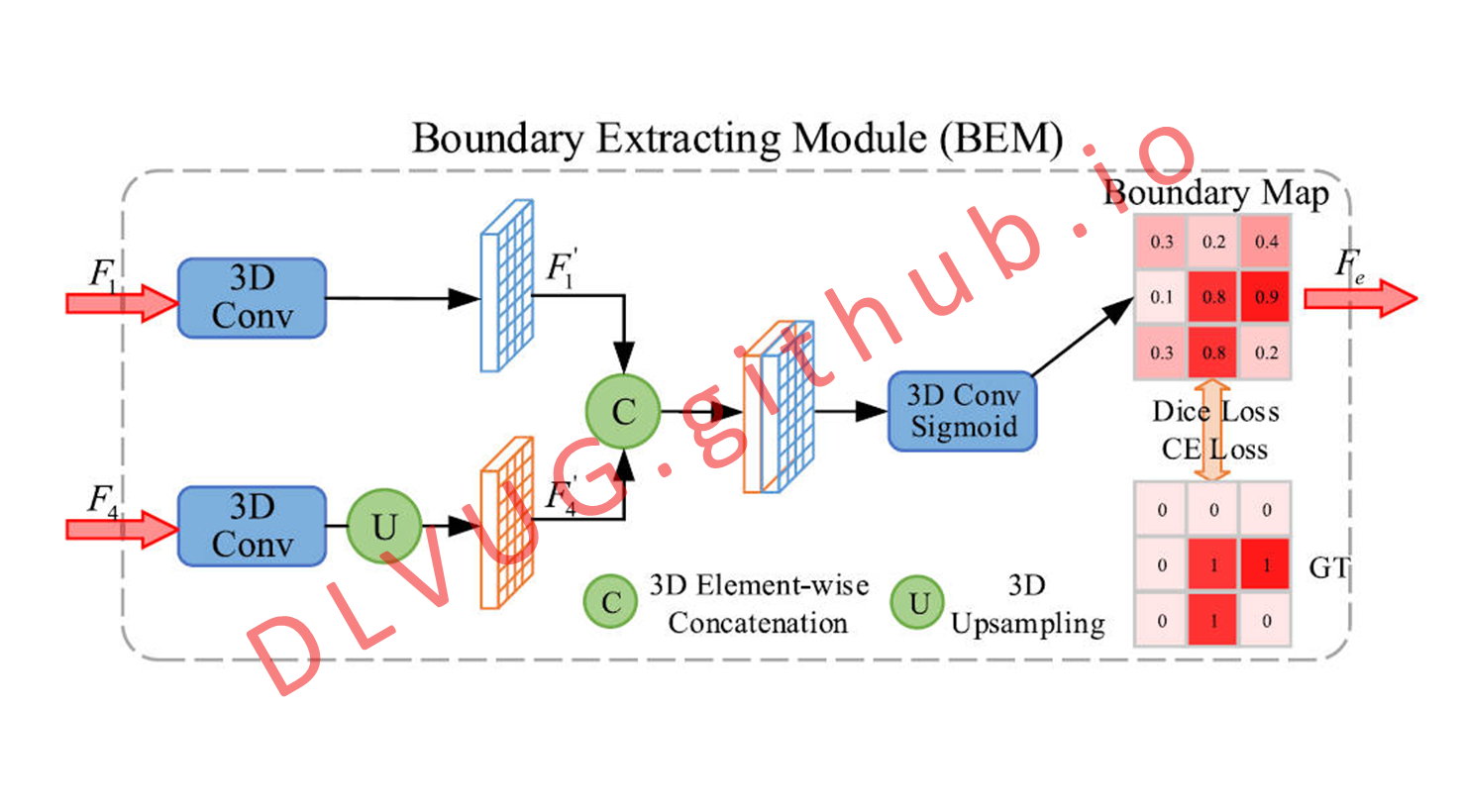
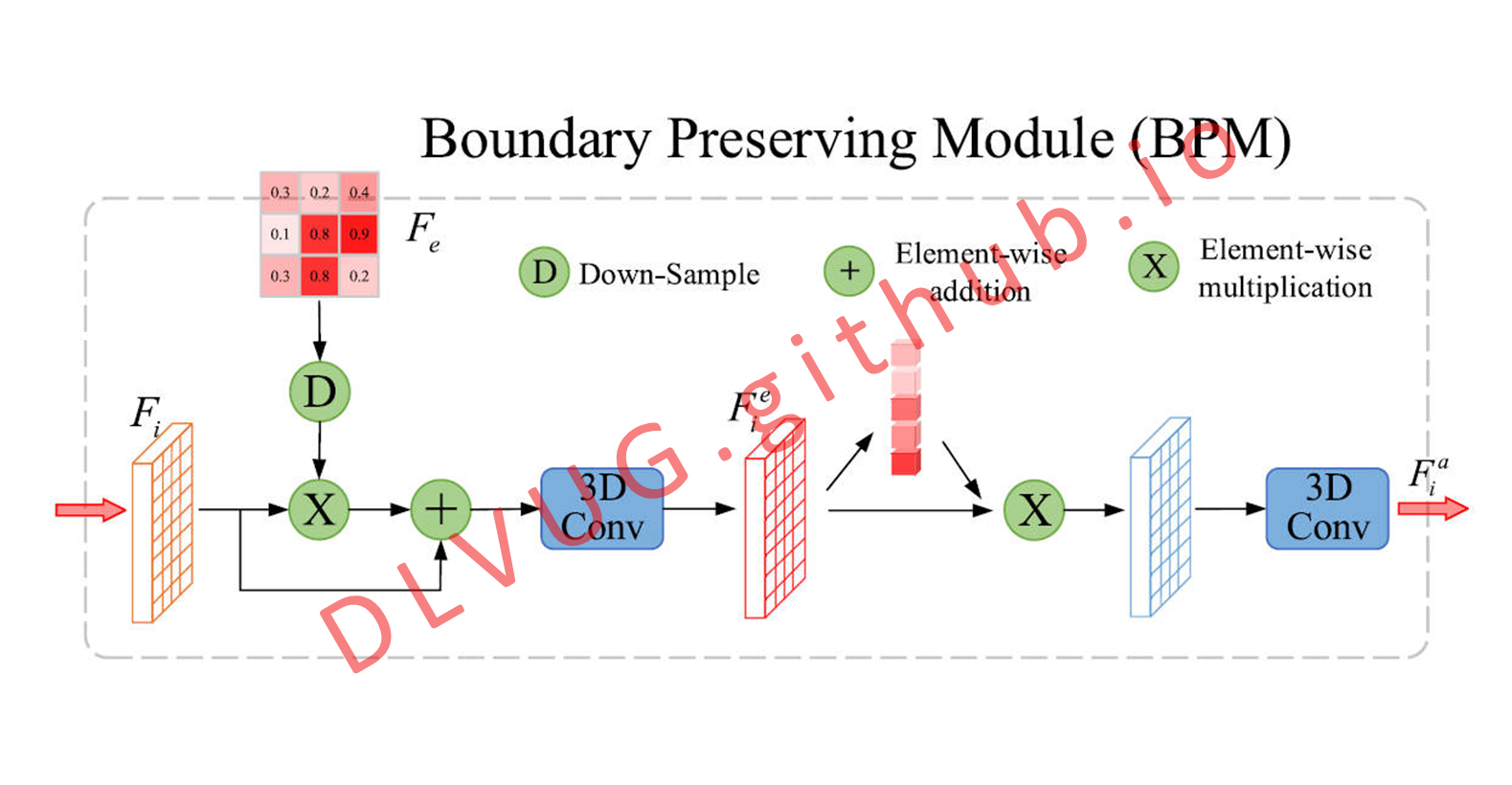
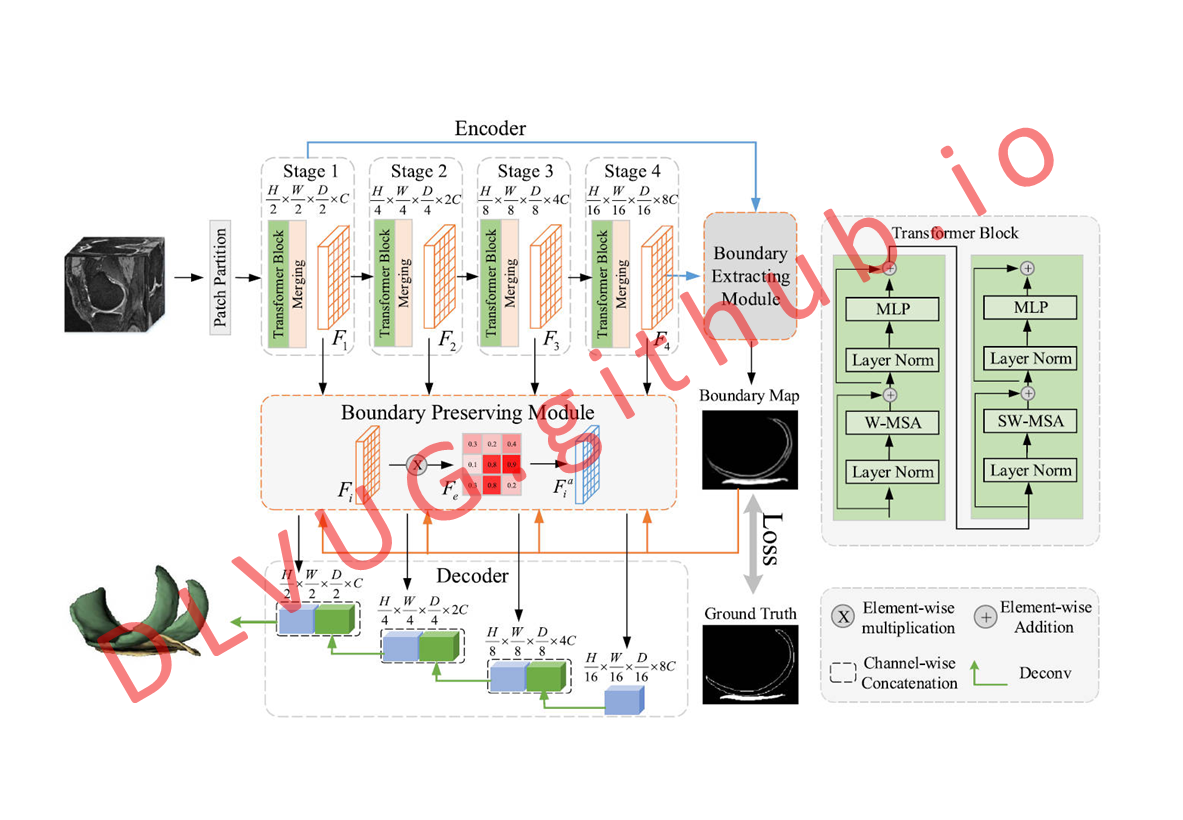
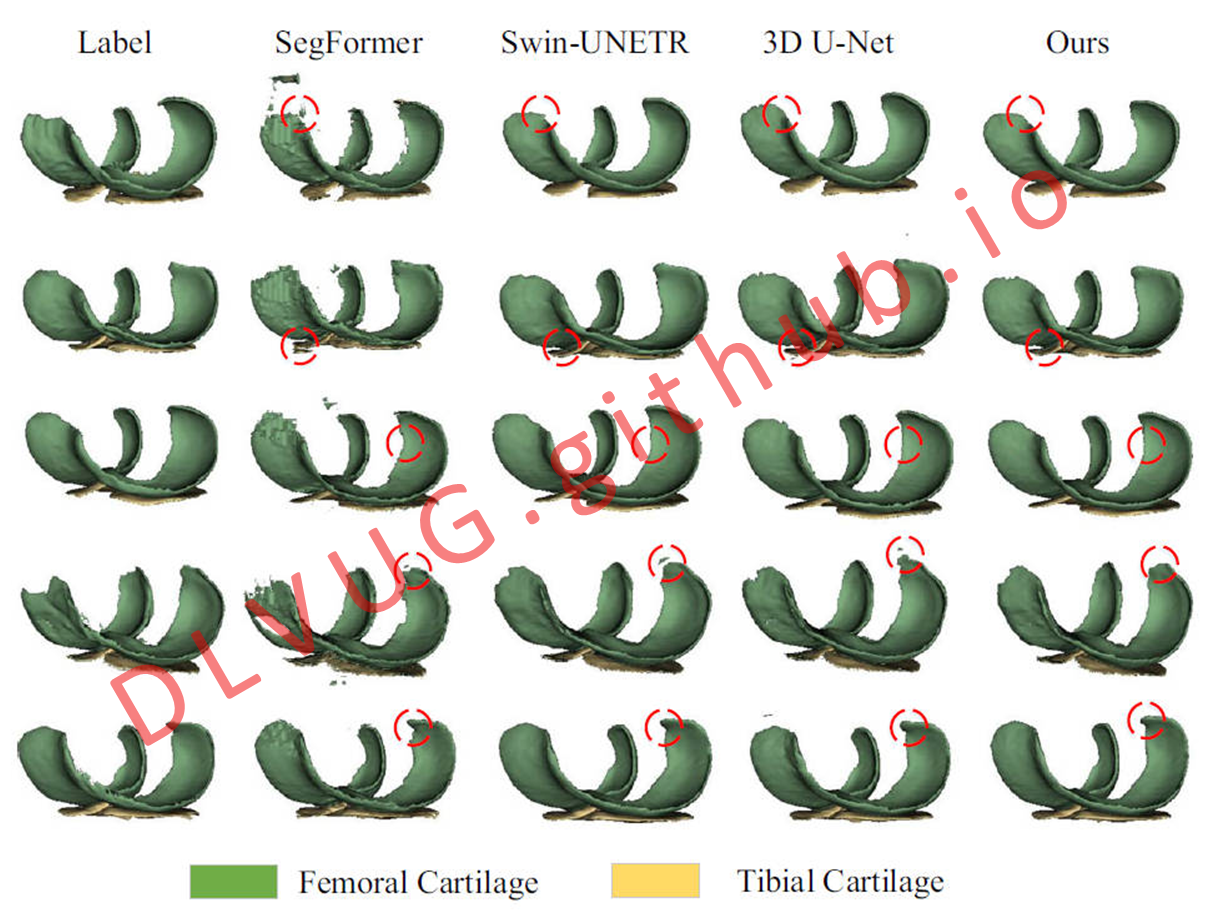
Our research team addresses the issues of low contrast and boundary ambiguity in 3D volumetric medical image segmentation, as well as the lack of effective boundary preservation in existing 2D-oriented methods, by proposing the Hybrid Transformer-CNN with Boundary-awareness Network (HTCB-Net). This network follows an encoder-decoder segmentation paradigm and incorporates learnable boundary modules. Specifically, we embed a learnable boundary extracting module (BEM) into the 3D swin-transformer encoder to generate auxiliary object-related boundary maps, which explicitly supervise the feature extraction process and help the model obtain rich and discriminative representations. We then design a boundary preserving module (BPM) that adopts a novel fusion strategy to integrate the extracted boundary maps with corresponding encoder features, combining boundary position awareness with spatial complement and channel attention for enhanced feature representation. We evaluate our method on three public CT and MRI datasets (OAI-ZIB, Spleen, Pancreas), and the quantitative results show that HTCB-Net achieves more precise 3D boundary preservation and significant improvements, especially in Average Symmetric Surface Distance (ASSD).
研究团队针对3D体积医学图像分割中器官与周围组织对比度低、边界模糊,以及现有方法多聚焦于2D边界增强而缺乏对3D边界体素有效保留的问题,提出了具有边界感知能力的混合Transformer-CNN网络。该网络遵循编码器-解码器分割范式,并集成了可学习的边界模块。具体而言,团队在3D swin-transformer编码器中嵌入了一个可学习的边界提取模块(BEM,Boundary Preserving Module),用以生成辅助性的对象相关边界图,从而显式监督特征提取过程,帮助模型获取丰富且具有判别性的特征表示。随后,团队设计了边界保留模块(BPM,Boundary Preserving Module),采用新型融合策略将提取的边界图与对应的编码器特征相结合,通过空间互补和通道注意力机制将边界位置感知融入特征增强中。团队在三个公开的CT和MRI数据集(OAI-ZIB、Spleen、Pancreas)上进行了定量实验,结果表明HTCB-Net能够保留更精确的3D边界,并在平均对称表面距离(ASSD)指标上取得显著改进。